Shopping Cart

Guide to choosing professional baking trays
To choose the right commercial baking tray, it's not enough to look at the material or size: you must start with your working method.
The professional oven you use, the product to be baked, and your production pace are the factors that truly make a difference. The correct tray guarantees even baking and a smooth workflow; the wrong model, conversely, means undercooked bottoms, dry products, and wasted time in the laboratory.
This guide was created precisely to help you choose the most suitable tray, starting with 3 steps.
How to choose professional trays based on oven type
The first element to evaluate when choosing a professional tray is always the type of oven available. Each oven transmits heat differently: some work primarily by contact and radiation, others by air circulation, and still others combine heat, ventilation, and trolley movement.
In general:
Static and deck ovens
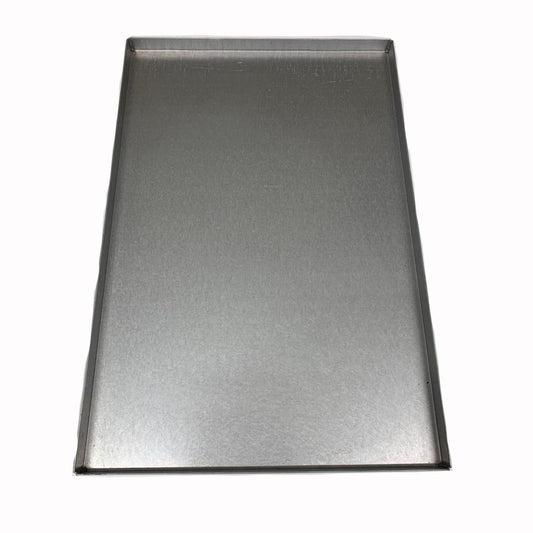
In these ovens, the heat arrives more directly from the chamber and the baking surface. For this reason, it is advisable to choose solid trays with good heat transmission on the bottom. In this case, it is important that the tray promotes thermal contact and does not dissipate heat too quickly, to support the development of the dough during the first baking phase.
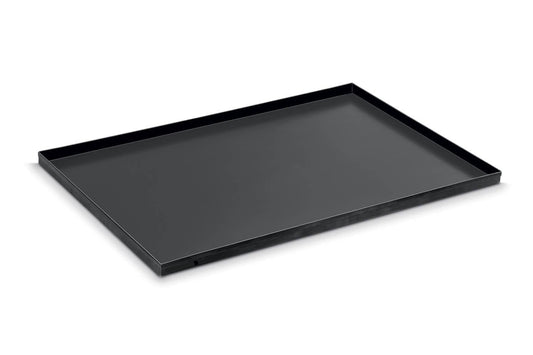
Recommended combination: Deck oven + Aluminized steel tray (bread and pastry) or Blue iron tray (pizza).
Convection or fan-assisted ovens
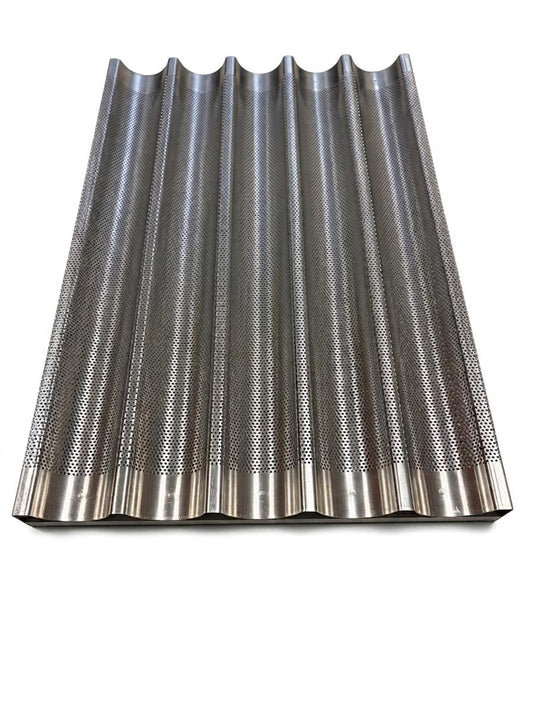
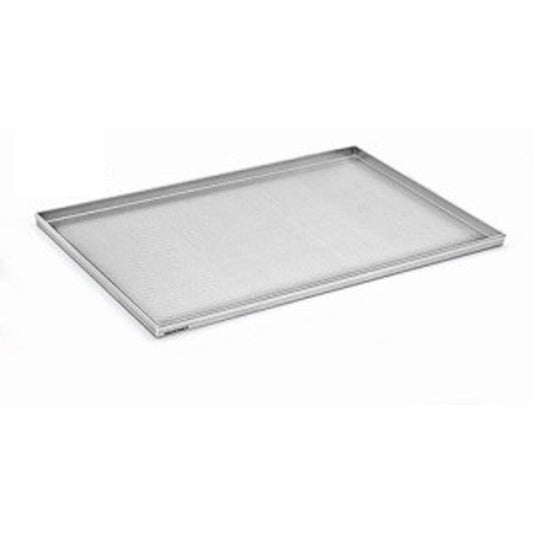
In convection ovens, baking occurs thanks to the circulation of hot air. Here, the tray must not obstruct the passage of air, especially when working on multiple levels. Micro-perforated trays are often the most suitable choice because the micro-perforations allow the dough's moisture to evaporate more easily and promote a more uniform heat distribution. They are useful for obtaining drier, more regular products that are well-baked even on the bottom.
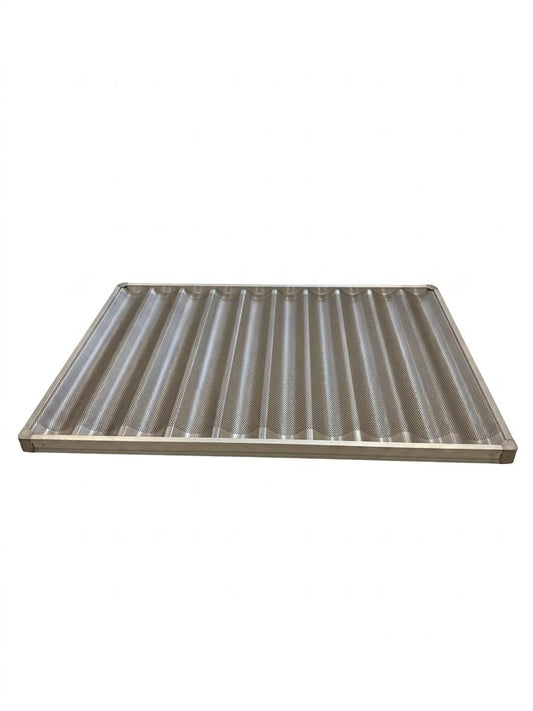
Recommended combination: Anemos convection oven + Perforated aluminum tray for pastry and bakery products, Corrugated tray with frame, or Corrugated tray with bottom crossbar for baking baguettes and loaves.
Rotary ovens
Rotary ovens combine hot air circulation with the continuous rotation of a trolley, ensuring even baking for large volumes. For the heat to envelop the products evenly, the best choice falls on perforated aluminum trays: the holes maximize air passage, while the lightness of the aluminum facilitates loading and unloading. Furthermore, in this system, the tray never works alone: it must have dimensions and edges perfectly compatible with the baking trolley guides to guarantee stability during rotary movement.
Recommended combination: Rotor Oven 18 Trays (or Rotor 15 Trays and Mini Rotor versions) + Rotor oven trolley + Perforated aluminum tray.
How to choose professional trays based on the type of product
After the oven, the second element to evaluate is the product to be baked. The classic flat format is the ideal solution for bread, focaccia, pan pizza, pastry bases, croissants, and many sweet or savory baked goods. However, when the product must maintain a precise shape, develop regularly, or be standardized in production, it is better to choose a specific tray:
For loaves, baguettes, and breadsticks
For elongated products or those that must maintain a regular shape, corrugated trays help support the dough during baking and achieve more consistent results.
Our advice: Corrugated perforated aluminum tray with bottom crossbar or Corrugated tray with frame.
For hamburger buns and mini pizzas
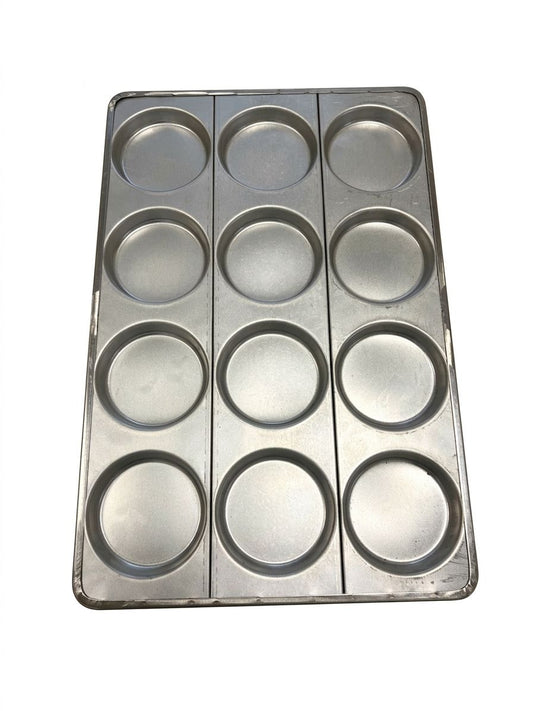
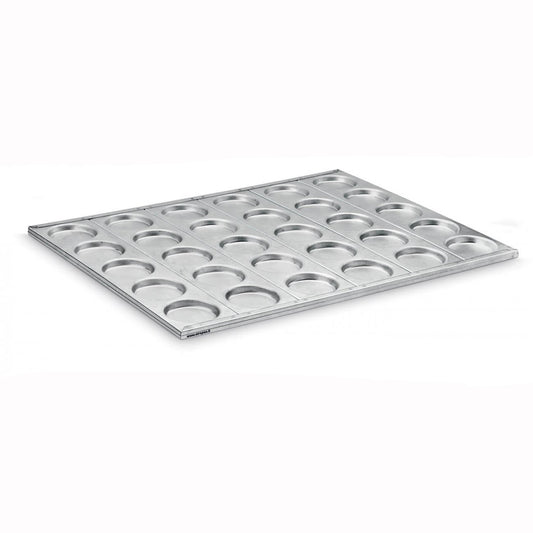
When it is necessary to obtain round and uniform products, shaped trays help maintain a more regular shape, diameter, and development.
Our advice: Aluminized steel tray 60x80 for hamburger buns and mini pizzas or Hamburger and mini pizza tray 40x60.
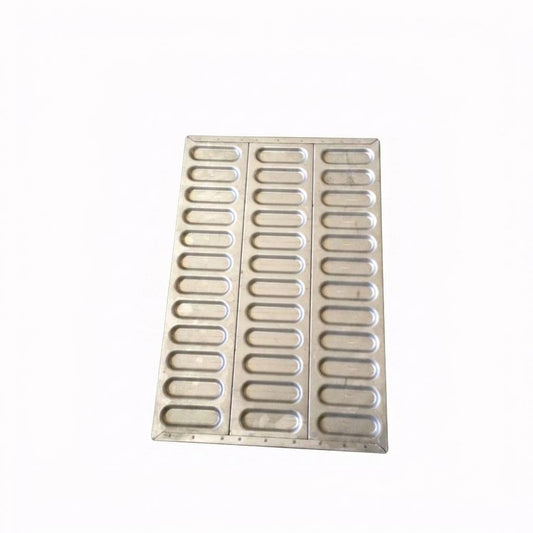
For ladyfingers and hot dogs
For ladyfingers and hot dog buns as well, it is preferable to use a dedicated tray, designed to maintain a more uniform shape, size, and development during baking.
Our advice: Aluminized steel tray for ladyfingers.
Other actors to consider when choosing a professional tray
In addition to the oven, product, and size, it is also important to consider how the baking tray will be used every day in the laboratory. Therefore, before purchasing, it is useful to evaluate some practical aspects:
- Resistant materials: opt for materials suitable for frequent cycles, high temperatures, and continuous handling, such as aluminum.
- Quantity of trays needed: calculate how many trays must go into the oven for each cycle and how many are needed to manage preparation, proofing, baking, and cooling without slowing down the workflow.
- Compatibility with other professional equipment: verify that the format is compatible with all phases of the process.
- Ease of cleaning: also evaluate how easy it will be to clean and maintain the tray over time. Each material requires different care: to learn more, read the dedicated article on cleaning professional baking trays.
If you still have doubts about choosing the most suitable tray for your oven or your production, contact us: we can help you find the correct solution.